

As summer temperatures climb in the Chattanooga area, keeping your home comfortable without skyrocketing energy bills can feel like a constant battle. The typical response is to crank down the air conditioning, but this approach only addresses the symptom, not the cause of the heat. True, lasting comfort comes from a holistic strategy that reduces how much heat enters your home or commercial building in the first place.
This guide explores a comprehensive roundup of effective, actionable ways to keep your house cool in summer, moving far beyond just adjusting the thermostat. We will cover a range of solutions, from high-tech upgrades like advanced residential and commercial window films to timeless strategies such as natural ventilation and strategic landscaping. Each method is broken down with practical implementation details, helping Chattanooga-area homeowners and business owners create a cooler, more energy-efficient, and comfortable indoor environment.
Many of these strategies, particularly window tinting, also offer significant year-round benefits. While they block solar heat gain in the summer, professional-grade films can also help retain interior heat during the colder months, reducing your heating costs and improving comfort through winter. This article provides the knowledge you need to conquer the heat, lower your utility bills, and reclaim your space, regardless of the season. Whether you're seeking immediate relief or planning long-term property improvements, these proven techniques will empower you to build a more resilient and efficient property.
1. Window Film and Tinting
One of the most effective ways to keep your house cool in summer is by tackling solar heat where it enters most: your windows. Modern residential and commercial window films are a high-tech solution applied directly to glass to block a significant amount of the sun's heat-producing infrared radiation and harmful UV rays before they can raise your indoor temperature.
Unlike older, dark tints, today's advanced nano-ceramic films, like those from industry leader XPEL, are virtually clear. They selectively filter out heat without sacrificing natural light or your view. This technology is a game-changer for passive cooling, helping your HVAC system run less and potentially lowering summer cooling bills by 30-40%. For property owners in Chattanooga and the surrounding 45-60 mile radius, this represents a significant opportunity for energy savings.
A Year-Round Energy Solution for Chattanooga
While exceptional for blocking summer heat, the benefits don't disappear when the temperature drops. As we head into winter, it's crucial for property owners to understand the dual-season performance of professional window films. High-quality films provide an insulating layer that reflects radiant heat back into your rooms, reducing heat loss through the glass and lowering your heating expenses. This is a vital, often overlooked advantage in the Chattanooga climate, where chilly winters also drive up utility costs. The same film that keeps you cool in July keeps you warmer in January, making it a smart, long-term investment.
Actionable Tips for Choosing Window Film:
- Prioritize Placement: For maximum summer impact, focus on south-facing and west-facing windows, which receive the most intense direct sun.
- Choose Nano-Ceramic: Opt for advanced nano-ceramic films over older metalized versions. They offer superior heat rejection without interfering with cell phone or Wi-Fi signals.
- Consult a Professional: A certified local installer can analyze your specific needs, from reducing glare in a commercial office to protecting furnishings in a home, and recommend the right film. Understanding key metrics like Solar Heat Gain Coefficient is vital, and a pro can guide you through the options. You can explore more expert-approved ways to block sunlight from windows to complement this strategy.
- Check the Warranty: Look for a lifetime residential warranty and a robust commercial warranty, as this signifies a top-tier product built to last.
2. Air Conditioning Systems (Central and Ductless)
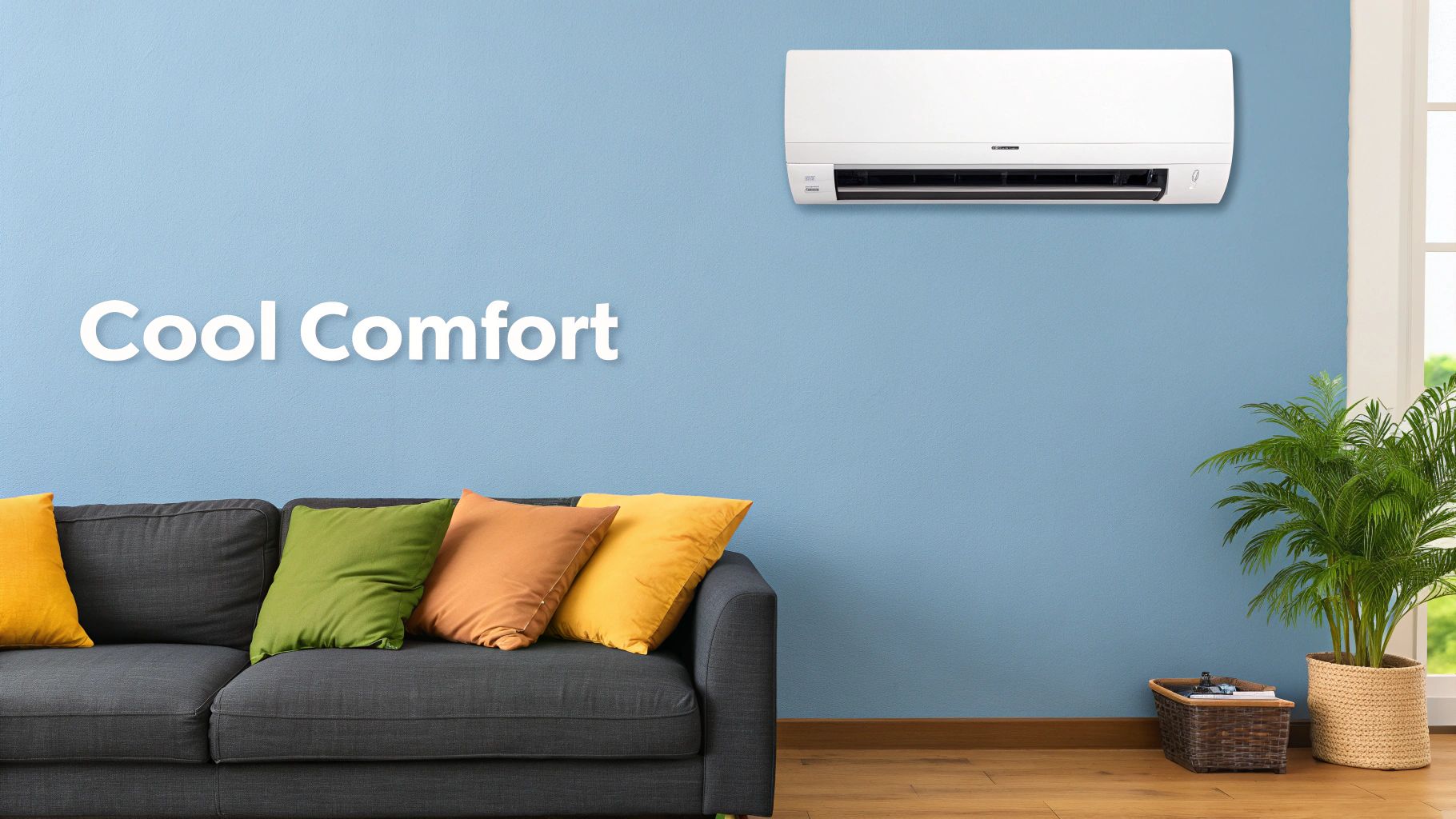
While passive cooling methods are foundational, a high-efficiency air conditioning system is the cornerstone of reliable comfort during a hot and humid Chattanooga summer. Central air systems cool the entire home by distributing air through ductwork, while ductless mini-split systems offer targeted cooling for specific rooms or zones. Both operate on a refrigeration cycle, actively removing heat and humidity from your indoor environment to provide a consistently cool, comfortable space.
Modern ENERGY STAR certified units, from trusted brands like Carrier and Trane, are far more efficient than older models. They leverage variable-speed compressors and smart thermostats to precisely match cooling output to your home's needs, preventing the energy waste associated with constant on-off cycles. This technology is a primary reason why a well-maintained AC is one of the most effective ways to keep a house cool in summer.
A Smart Investment for Chattanooga Comfort
In the Tennessee Valley, where summer humidity can be relentless, an AC system's ability to dehumidify is just as important as its cooling power. By pulling moisture from the air, it makes your home feel significantly more comfortable at higher temperatures. Whether it's a central system in a modern home or ductless units providing zoned cooling in a multi-unit commercial property, a modern AC is a crucial investment for maintaining comfort and air quality during the peak heat season.
Actionable Tips for Efficient AC Use:
- Reduce the Workload: Combine your AC with high-performance window film. Blocking solar heat before it enters can reduce the cooling load on your system by up to 40%, leading to significant energy savings.
- Smart Thermostat Settings: Set your thermostat to 78°F when you are home and higher when you are away. Every degree you raise it can save up to 3% on cooling costs.
- Annual Maintenance is Key: Schedule a professional tune-up each spring before the peak season begins. A clean, well-maintained system runs more efficiently and is less likely to break down. You can find more practical advice on how to lower your electric bill in summer by optimizing your AC usage.
- Clear the Condenser: Ensure the outdoor condenser unit is free from leaves, grass clippings, and other debris. It needs at least two feet of clear space around it for proper airflow and efficient operation.
3. Strategic Use of Ceiling and Portable Fans
One of the most cost-effective ways to keep your house cool in summer involves harnessing the power of simple air movement. Ceiling and portable fans don't actually lower the air temperature; instead, they create a wind-chill effect on your skin, making you feel several degrees cooler. This sensation allows you to raise your thermostat setting without sacrificing comfort, directly reducing your AC's workload and energy consumption.
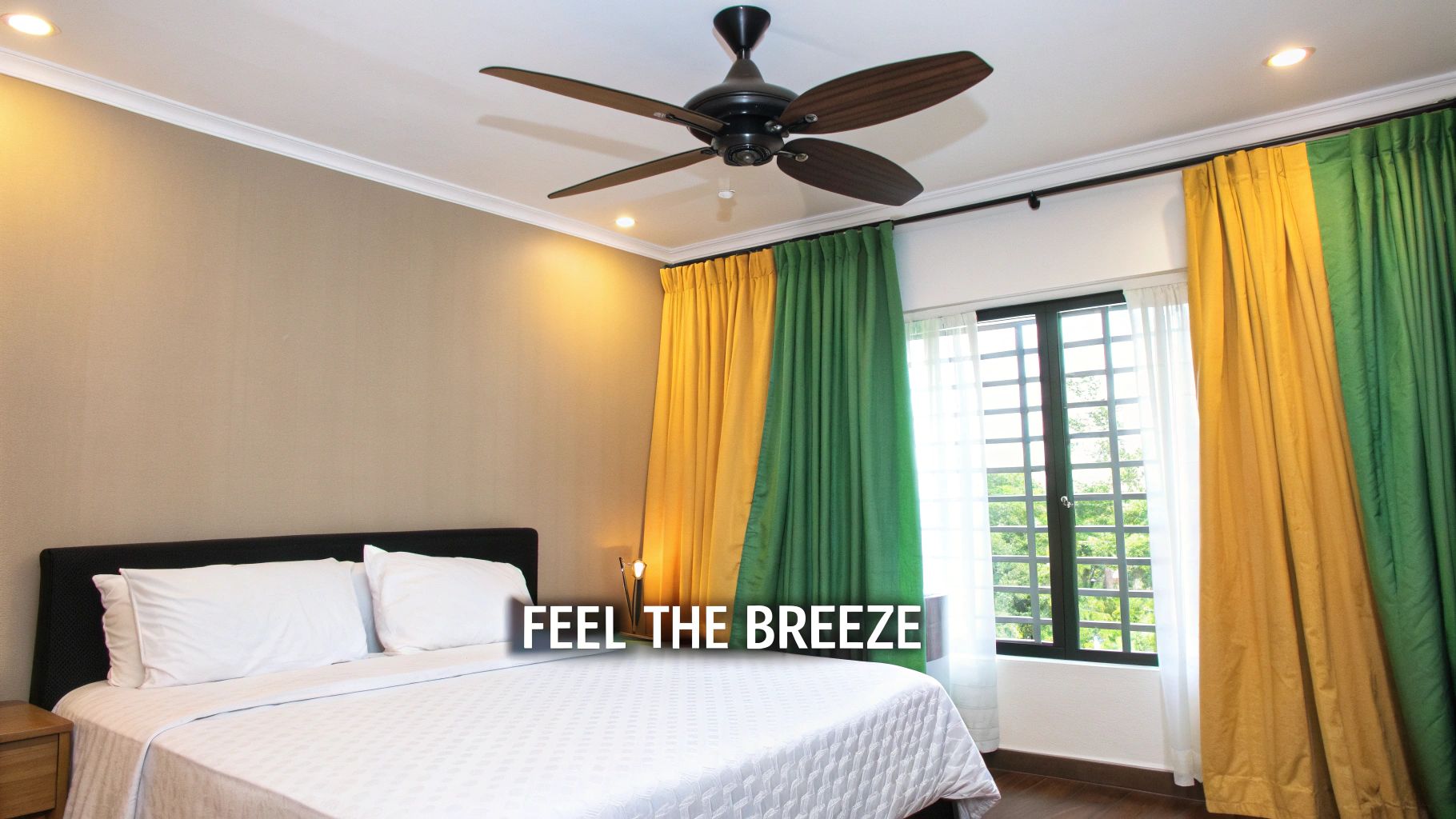
This strategy is exceptionally effective for managing comfort on mild summer days or during cooler evenings when running the air conditioner feels excessive. By promoting constant air circulation, fans also help to distribute cooled air more evenly throughout a room, preventing hot spots and improving the overall efficiency of your primary cooling system.
A Smart Cooling Strategy for Chattanooga Homes
In Chattanooga's humid climate, air circulation is not just about comfort; it's about managing moisture and stuffiness. Fans are a powerful tool for preventing stagnant air, which can feel oppressive during our sweltering summer months. Using fans allows homeowners to maintain a comfortable indoor environment while relying less on energy-intensive air conditioning, leading to tangible savings on monthly utility bills. This approach bridges the gap between no cooling and full-blast AC, offering a sensible, low-cost middle ground.
Actionable Tips for Using Fans Effectively:
- Set for Summer: Ensure your ceiling fans are rotating counterclockwise. This pushes cool air downward, creating a direct breeze. You can easily check this by standing under the fan; you should feel the air moving down.
- Run Only When Occupied: Remember that fans cool people, not rooms. Turn them off when you leave a room to save electricity. There's no benefit to running a fan in an empty space.
- Create a Cross-Breeze: Position portable fans strategically to pull cool air in and push hot air out. Place one fan facing inward in a window on the shady side of your house and another facing outward on the sunny side.
- Combine with Other Methods: For maximum impact, pair fans with other cooling strategies. Running a fan in a room with professionally installed window film or drawn blinds significantly enhances the cooling effect by circulating air that is already shielded from solar heat gain.
4. Window Treatments and Shading (Blinds, Shades, Shutters)
While window film addresses solar heat at the glass surface, interior and exterior window treatments provide another powerful layer of defense. Thermal blinds, cellular shades, and exterior shutters are designed to physically block solar radiation before it can heat up your living space. These solutions work by creating an insulating barrier, reflecting sunlight away from the window, and reducing the amount of heat that transfers indoors.
This approach is highly effective for managing both heat and light. By keeping treatments closed during the hottest parts of the day, you can significantly reduce solar heat gain. When combined with window film, these treatments create a comprehensive solar control system that dramatically cuts cooling loads, enhances privacy, and maintains your home's aesthetic appeal.
A Powerful Combination for Chattanooga Homes
In the varied Chattanooga climate, layering solutions offers the greatest flexibility and performance. For example, combining a high-performance window film with insulating cellular shades creates a dynamic duo. The film works 24/7 to reject heat and UV rays, while the shades can be deployed during peak sun hours (typically between 10 a.m. and 4 p.m.) for maximum heat blocking. This strategy allows homeowners to enjoy natural light in the morning and evening while creating a cool sanctuary during the most intense summer afternoons.
Actionable Tips for Choosing Window Treatments:
- Prioritize Placement: Just like with window film, start by installing thermal or cellular shades on your south-facing and west-facing windows to get the most significant impact on heat reduction.
- Layer for Maximum Control: For the ultimate in energy efficiency, combine window treatments with professionally installed window film. This pairing addresses heat at the glass and within the room, offering unparalleled performance.
- Embrace Automation: Consider motorized shades from brands like Hunter Douglas or Lutron that can be programmed to close automatically during peak heat hours, ensuring your home stays cool even when you're away.
- Choose Light Colors: Opt for blinds and shades with a light-colored or white backing on the side that faces the window. Lighter colors are more effective at reflecting solar heat back outside.
5. Reflective Roofing and Cool Roofs
While windows are a major source of heat gain, your roof is the single largest surface area exposed to direct summer sunlight. A traditional dark asphalt shingle roof can reach temperatures of 150°F or more, radiating that heat down into your attic and living spaces. Cool roofing is a powerful strategy that tackles this problem head-on by using materials designed to reflect sunlight and heat away from your home.
These advanced materials feature high solar reflectance (the ability to reflect sunlight) and high thermal emittance (the ability to release absorbed heat). This one-two punch significantly lowers your roof's surface temperature, which in turn reduces the amount of heat transferred into your home. This lessens the burden on your HVAC system, leading to substantial energy savings and a more comfortable indoor environment.
A Smart Upgrade for Chattanooga Buildings
In the intense sun of a Chattanooga summer, the impact of a cool roof is undeniable. Local commercial buildings often use standing-seam metal roofs, which are naturally reflective, to cut down on massive cooling costs. Similarly, homeowners can retrofit their properties with special reflective coatings or choose light-colored shingles during a roof replacement to achieve similar benefits. This upgrade not only lowers energy bills but also extends the life of the roof by reducing thermal stress.
Actionable Tips for Choosing a Cool Roof:
- Prioritize Timing: The most cost-effective time to install a cool roof is when your existing roof needs replacement. This integrates the upgrade into a necessary home maintenance project.
- Explore Coating Options: For a more budget-friendly approach, reflective elastomeric coatings can be applied directly over many existing roof types, instantly boosting their solar reflectance.
- Certifications Matter: Look for products certified by the Cool Roof Rating Council (CRRC) or those with an ENERGY STAR label to ensure they meet performance standards for reflectance and emittance.
- Ventilation is Key: A cool roof works best when paired with proper attic ventilation. Ensure your soffit and ridge vents are clear to allow trapped hot air to escape, maximizing the cooling effect. To effectively minimize heat absorption from above, consider exploring various energy-efficient roofing solutions that can reflect sunlight and keep your home cooler.
- Combine with Other Solutions: For a comprehensive solar control strategy, pair a cool roof with high-performance window films to address heat gain from all angles.
6. Smart Thermostats and Automated Climate Control
Moving beyond manual adjustments, one of the most intelligent ways to keep your house cool in summer is to automate your climate control with a smart thermostat. These devices, like the popular Google Nest or Ecobee, learn your daily routines and preferences to create optimized cooling schedules. They automatically adjust the temperature based on whether you're home or away, ensuring you never waste energy cooling an empty space.
By connecting directly to your Wi-Fi, smart thermostats allow you to monitor and control your HVAC system from anywhere via a smartphone app. This level of precision management can lead to significant savings, with many Chattanooga homeowners reporting a 12-15% reduction in their summer cooling bills. It's an upgrade that pays for itself in energy efficiency.
A Data-Driven Approach to Comfort in Chattanooga
The true power of a smart thermostat lies in the data it provides. These systems generate detailed energy reports, showing you exactly when your HVAC system is working hardest. This insight is invaluable in the variable Chattanooga climate, allowing you to identify patterns of inefficiency and make informed adjustments. For instance, you might notice a spike in AC usage during the late afternoon, reinforcing the need for west-facing window treatments.
This technology empowers you to fine-tune your home’s performance, creating a perfect balance between comfort and cost. It transforms your HVAC system from a reactive appliance into a proactive, intelligent part of your home’s ecosystem, working smarter, not harder, to maintain a comfortable environment.
Actionable Tips for Using a Smart Thermostat:
- Set It and Forget It: Aim for a baseline of 78°F when you are home, as recommended by the Department of Energy. Each degree you raise it can save up to 3% on cooling costs.
- Leverage Geofencing: Enable the geofencing feature, which uses your phone's location to automatically switch the system to an energy-saving "away" mode when you leave and resume cooling as you return.
- Analyze Energy Reports: Regularly review your monthly energy usage reports. Use this data to pinpoint times of high consumption and adjust your schedules or home habits accordingly.
- Use the "Auto" Fan Setting: Avoid running the fan continuously. The "auto" setting ensures the fan only runs when the system is actively cooling, which is far more energy-efficient.
7. Natural Ventilation and Cross-Breezes
Harnessing the power of natural air movement is one of the most cost-effective ways to keep your house cool in summer without relying on your HVAC system. This passive cooling strategy involves strategically opening windows and doors to create a cross-breeze, which pushes warm, stagnant indoor air out while pulling cooler, fresh outdoor air in. It is a fundamental principle of green building and climate-adaptive design.
This method works best when the outdoor temperature is lower than the indoor temperature, such as during the cool early mornings and after sunset. By flushing out the heat accumulated during the day and replacing it with cooler night air, you can significantly lower your home's baseline temperature before the sun begins to heat things up again, reducing the workload on your air conditioner.
A Smart Strategy for Chattanooga's Climate
In the Chattanooga area, where summer mornings can be pleasantly cool before the afternoon humidity sets in, this technique is particularly effective. It allows homeowners to pre-cool their living spaces for free, improving air quality and comfort. For commercial spaces like offices or restaurants, venting the building early can create a more comfortable environment for incoming employees and customers while delaying the need to run expensive cooling systems at full power. This approach works beautifully in spring and fall as well, extending the seasons where you can rely on natural, free cooling.
Actionable Tips for Effective Ventilation:
- Create a Wind Tunnel: For a powerful cross-breeze, open windows on opposite sides of your home, particularly on the side where the wind is coming from and the side it's blowing toward.
- Time It Right: The golden hours for ventilation are typically from late evening until mid-morning. Make it a habit to open windows before bed and close them before the outdoor temperature starts to climb.
- Use Fans to Assist: Place a box fan facing inward in a window on the cooler, shaded side of your house to push cool air in. Use another fan facing outward in a sunny-side window to exhaust hot air.
- Seal Up for the Day: Once you've trapped the cool morning air inside, close all windows and draw your blinds or shades. Combining this with high-performance window film is a powerful duo, as the film will prevent the sun from reheating your pre-cooled interior.
8. Landscaping and Shade Trees
One of the most powerful and enduring ways to keep your house cool in summer is to harness nature's own air conditioner: shade trees. Strategically planted trees and shrubs provide a living canopy that blocks intense solar radiation from ever reaching your home's roof, walls, and windows. Beyond just casting shade, trees actively cool the air around them through a process called evapotranspiration, creating a comfortable microclimate that can lower ambient temperatures by several degrees.
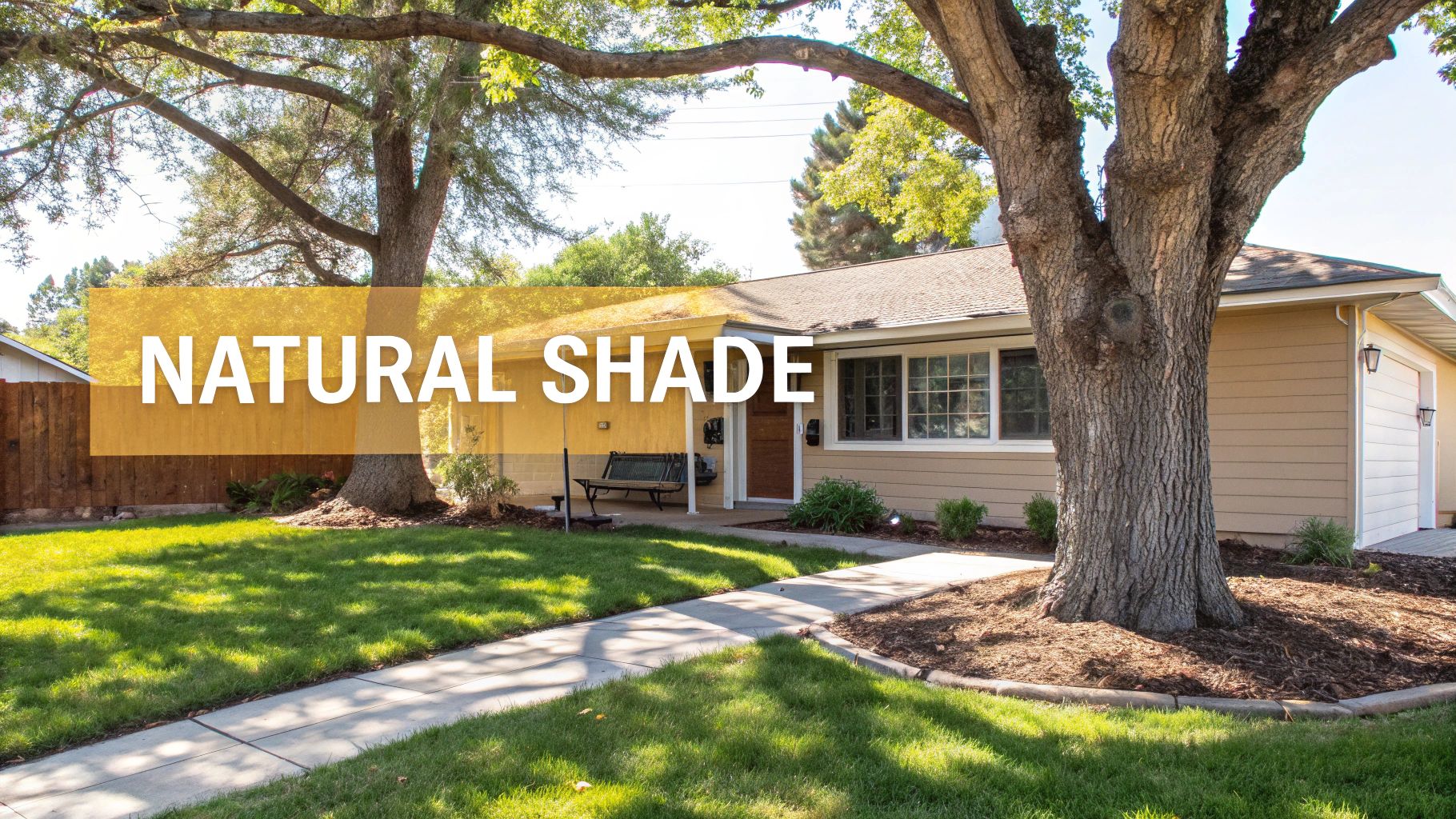
Unlike a mechanical fix, landscaping is a long-term investment that grows in value and effectiveness over time. A mature tree can block a significant amount of solar heat gain, dramatically reducing the workload on your HVAC system and lowering energy bills. The impact is so significant that the EPA's Heat Island Reduction Program champions urban forestry as a key strategy for community-wide cooling.
A Living Asset for Your Chattanooga Property
In the Chattanooga area, where summer sun can be relentless, a well-planned landscape is both a comfort and an energy-saving asset. Deciduous trees offer the best of both worlds; their dense summer foliage provides maximum shade when needed most, and in winter, they shed their leaves to allow warming sunlight to reach your home, passively reducing heating costs. This seasonal adaptability makes landscaping a smart, year-round solution perfectly suited to our regional climate.
Actionable Tips for Strategic Landscaping:
- Prioritize Placement: Plant deciduous trees on the south and west sides of your property. This positioning is critical for blocking the most intense afternoon sun during the hottest parts of the day and year.
- Choose Native Species: Select trees and shrubs that are well-suited to Chattanooga's climate and soil, such as oaks, maples, or dogwoods. Native plants require less maintenance and are more resilient to local conditions.
- Plan for Maturity: Always consider the tree's mature size and canopy spread, not just its size at the nursery. Plant larger trees at least 20 feet from your foundation to provide optimal shade without risking structural interference.
- Combine with Other Strategies: Landscaping works exceptionally well when paired with other cooling methods. Combining tree shade with reflective window film, for instance, creates a comprehensive defense against solar heat.
9. Evaporative Coolers (Swamp Coolers)
For homes in less humid environments, an evaporative cooler, often called a swamp cooler, offers a hyper-efficient alternative to traditional air conditioning. This method is one of the most natural ways to keep a house cool in summer by harnessing the power of water evaporation. The system works by pulling hot, dry outside air through water-saturated pads, which instantly chills the air before a fan circulates it throughout your home.
Unlike standard AC units that recirculate and cool the same indoor air, evaporative coolers continuously bring in fresh, cooled air from the outside. This process is incredibly energy-efficient, using up to 75% less electricity than refrigerated air conditioning. It is an ideal solution for workshops, garages, or even whole-home systems where the climate supports low-humidity cooling.
Is an Evaporative Cooler Right for Chattanooga?
The effectiveness of evaporative coolers is directly tied to humidity. They perform best when the relative humidity is consistently below 50-60%. In Chattanooga, where summer humidity is often high, a swamp cooler might not be the most effective primary cooling source for an entire home. However, it can be a fantastic, low-cost option for spot-cooling specific areas like covered patios, sunrooms with excellent ventilation, or workshops where bringing in fresh air is a priority. For enclosed living spaces, traditional HVAC systems or ductless mini-splits remain the more reliable choice for our climate.
Actionable Tips for Using Evaporative Coolers:
- Assess Local Humidity: Before investing, monitor your local humidity levels during the hottest parts of the day. They work best in drier conditions.
- Ensure Ample Ventilation: Swamp coolers require an open window or door to exhaust humid air and prevent a stuffy, damp environment. Without proper airflow, they can increase indoor humidity.
- Perform Regular Maintenance: Clean the unit and replace the water-saturated pads according to the manufacturer's schedule. This prevents mold, mildew, and mineral buildup, ensuring the air stays fresh and cool.
- Consider Portable Units: For targeted cooling on a porch or in a garage, a portable evaporative cooler provides a flexible and affordable way to beat the heat without a permanent installation.
10. Proper Insulation and Air Sealing
While many strategies focus on actively cooling your home, one of the most powerful ways to keep your house cool in summer is by preventing heat from getting inside in the first place. High-quality insulation and comprehensive air sealing create a robust thermal barrier, stopping unwanted heat from infiltrating through your attic, walls, and foundation. This drastically reduces the workload on your HVAC system, improving its efficiency and lowering your energy bills.
A well-insulated and sealed building envelope is the foundation of a comfortable home. In many Chattanooga houses, especially older ones, attic insulation improvements alone can cut cooling needs by 20% or more. This passive approach works silently in the background, ensuring the cool air your air conditioner produces stays inside where it belongs, rather than constantly fighting against incoming heat.
A Foundational Strategy for Chattanooga Homes
In Chattanooga's climate, with its hot, humid summers and chilly winters, a well-sealed building envelope is essential for year-round comfort and savings. In summer, it keeps oppressive heat out. In winter, it prevents precious heated air from escaping. This dual-season performance makes improving your home's insulation and air sealing one of the most cost-effective energy efficiency upgrades you can make, paying for itself over time in reduced utility costs.
Actionable Tips for Insulation and Air Sealing:
- Start with the Attic: Heat rises, but in summer, solar radiation turns your attic into an oven that radiates heat down into your living space. Ensuring your attic is properly insulated to modern standards is often the single most impactful upgrade.
- Seal Leaks First: Before adding insulation or even installing high-performance window film, seal air leaks around windows, doors, electrical outlets, and plumbing penetrations. This prevents drafts and stops thermal weak points.
- Identify Problem Areas: Use a professional thermal imaging camera or follow a detailed home energy audit checklist to find hidden air leaks and insulation gaps in your walls and ceilings.
- Don't Forget Ductwork: Leaky air ducts in an unconditioned attic or crawlspace can lose up to 30% of your cooled air before it ever reaches your rooms. Sealing ductwork is a critical, often overlooked, step.
10-Way Home Cooling Comparison
| Method | 🔄 Implementation Complexity | ⚡ Resource / Cost | 📊 Expected Outcomes | 💡 Ideal Use Cases | ⭐ Key Advantages |
|---|---|---|---|---|---|
| Window Film and Tinting | Moderate — professional installation recommended | $$$ upfront, low operating cost | High solar rejection (up to 93%); up to ~40% HVAC load reduction | South/west-facing windows; retrofits for homes, offices, storefronts | Durable, preserves views, strong UV/fade protection |
| Air Conditioning Systems (Central & Ductless) | High — installation, ductwork or multiple units | $$$$ high upfront & ongoing energy use | Maximum cooling & dehumidification; consistent temps | Hot climates; whole‑home or large commercial spaces | Most effective in extreme heat; precise temp control |
| Ceiling and Portable Fans | Low — plug‑and‑play or simple wiring for ceiling fans | $ very low purchase and running costs | Perceived cooling; can reduce AC use ~8–15% | Mild climates, occupied rooms, supplementing AC | Very energy‑efficient, immediate effect, portable |
| Window Treatments & Shading (Blinds, Shades, Shutters) | Low–Moderate — DIY to motorized installs | $$–$$$ depending on type/motorization | Reduces solar gain 45–75%; 10–25% cooling savings when used alone | Sun‑exposed rooms, smart homes, commercial facades | Flexible light/privacy control; complements window film |
| Reflective Roofing / Cool Roofs | Moderate–High — roof replacement or coating | $$$ higher upfront, long‑term savings | Lowers roof temp (~50°F); reduces cooling ~10–30% | Sun‑exposed roofs, re‑roof projects, commercial buildings | Extends roof life; reduces urban heat island; rebate eligible |
| Smart Thermostats & Automated Control | Low–Moderate — install and configuration; needs Wi‑Fi | $$ moderate device cost, saves over time | Reduces cooling by ~10–15% via schedules/learning | Most HVAC‑equipped homes, rentals, property management | Automated optimization, remote control, energy insights |
| Natural Ventilation & Cross‑Breezes | Low — window placement/operation; passive strategy | $ minimal to no operating cost | Zero‑cost cooling during cool hours; limited midday effect | Mild climates, shoulder seasons, buildings with cross‑vents | Fresh air, zero energy, improves indoor air quality |
| Landscaping & Shade Trees | Low–Moderate — planning, planting, ongoing care | $–$$ planting and maintenance; long‑term investment | Reduces cooling 20–35% over time; evapotranspiration cools 2–8°F | Properties with space for trees; long‑term sustainability plans | Aesthetic/environmental benefits; increases property value |
| Evaporative Coolers (Swamp Coolers) | Low–Moderate — simple install or portable setup | $–$$ low energy cost but uses water | Highly efficient in dry climates; up to ~75% energy savings vs AC | Arid, low‑humidity regions; outdoor/covered areas | Eco‑friendly, adds humidity, low operating cost |
| Proper Insulation & Air Sealing | Moderate–High — assessment and professional retrofits | $$$ significant upfront, strong long‑term ROI | Reduces cooling loads ~15–30%; foundational efficiency gains | All buildings, especially older/leaky envelopes | Year‑round benefits; improves HVAC performance; rebate eligible |
Creating Your Year-Round Comfort and Efficiency Plan
Navigating the intense heat of a Chattanooga summer doesn't have to be a battle against soaring energy bills and an overworked air conditioner. As we've explored, the most effective strategies for keeping your house cool involve a multi-layered approach that combines proactive upgrades, smart habits, and harnessing the power of nature. You now have a comprehensive toolkit of ten powerful methods, from foundational improvements like insulation and air sealing to the intelligent climate control offered by smart thermostats. The key is to move beyond simply reacting to the heat and instead build a resilient, efficient system for year-round comfort.
The journey to a cooler home or a more comfortable commercial space begins with understanding that not all solutions are created equal. While adjusting your thermostat and running ceiling fans are immediate, low-cost actions, the most significant and lasting impact comes from addressing the root cause of heat gain. Unprotected windows are often the primary culprits, acting like magnifying glasses that allow solar heat to flood your interiors. This is why a foundational investment in high-performance window film stands out as a cornerstone strategy.
From Reactive Cooling to Proactive Comfort
The ultimate goal is to create a property that is inherently more efficient. Instead of just treating the symptom (a hot interior) with more and more air conditioning, you can treat the cause by preventing the heat from getting inside in the first place. This is the difference between a reactive and a proactive approach.
- Reactive Approach: Constantly adjusting the AC, closing blinds after the room is already hot, and running fans on high to combat existing heat. This method is inefficient and costly.
- Proactive Approach: Installing solutions like window film, planting shade trees, and ensuring proper insulation. These strategies work passively to block heat before it enters, reducing the overall cooling load on your HVAC system from the start.
By combining a powerful proactive solution like window film with supportive strategies like strategic ventilation and proper HVAC maintenance, you create a powerful synergy. Your air conditioner no longer has to fight an uphill battle, leading to less wear and tear, lower energy consumption, and a more consistently comfortable environment.
A Strategy for Every Season in Chattanooga
While this guide has focused on ways to keep your house cool in summer, many of these strategies deliver benefits throughout the year. The investment in a more efficient home or business pays dividends long after the summer humidity has faded. This is particularly true for solutions designed for the unique climate of the Chattanooga region.
Key Takeaway: The best home comfort solutions are not seasonal fixes; they are year-round investments in efficiency and quality of life. An upgrade that helps in July should also provide value in January.
Professional window tinting is a prime example of a four-season solution. The same nano-ceramic technology that rejects infrared heat in the summer also acts as an insulating layer during the winter. It helps to keep your valuable heated air inside, reducing the workload on your furnace and preventing cold spots near windows. This dual-purpose performance makes it one of the most cost-effective upgrades for property owners in our area, offering a tangible return on investment every single month.
Ultimately, creating your ideal comfort and efficiency plan is about making informed choices. Start by identifying your property's biggest vulnerabilities, whether it's sun-drenched west-facing windows or an under-insulated attic. Then, layer solutions, starting with the most impactful ones. By taking control of how your home or business interacts with the elements, you're not just lowering your utility bills; you are investing in a more sustainable, comfortable, and valuable property for years to come.
Ready to make the most impactful upgrade to your home or commercial property's comfort and efficiency? Discover how advanced window film can transform your space by blocking summer heat and retaining winter warmth with Solar Sentinel Window Films & Tinting. Explore our residential and commercial solutions at Solar Sentinel Window Films & Tinting and take the first step toward year-round savings and comfort.