

When you see your windows fog up on a chilly Chattanooga morning, it's easy to wonder if you’re looking at a minor annoyance or a sign of a much bigger problem. What’s actually causing it?
In a nutshell, it's condensation. This is just the science-y term for when water vapor in the air bumps into a cooler surface and turns back into liquid water. It’s the same thing that happens when you take a glass of iced tea outside on a humid day—moisture forms on the outside of the glass where the warm, moist air meets the cold surface.
The key to figuring out what's going on with your windows is simple: where you see the fog tells you everything you need to know.
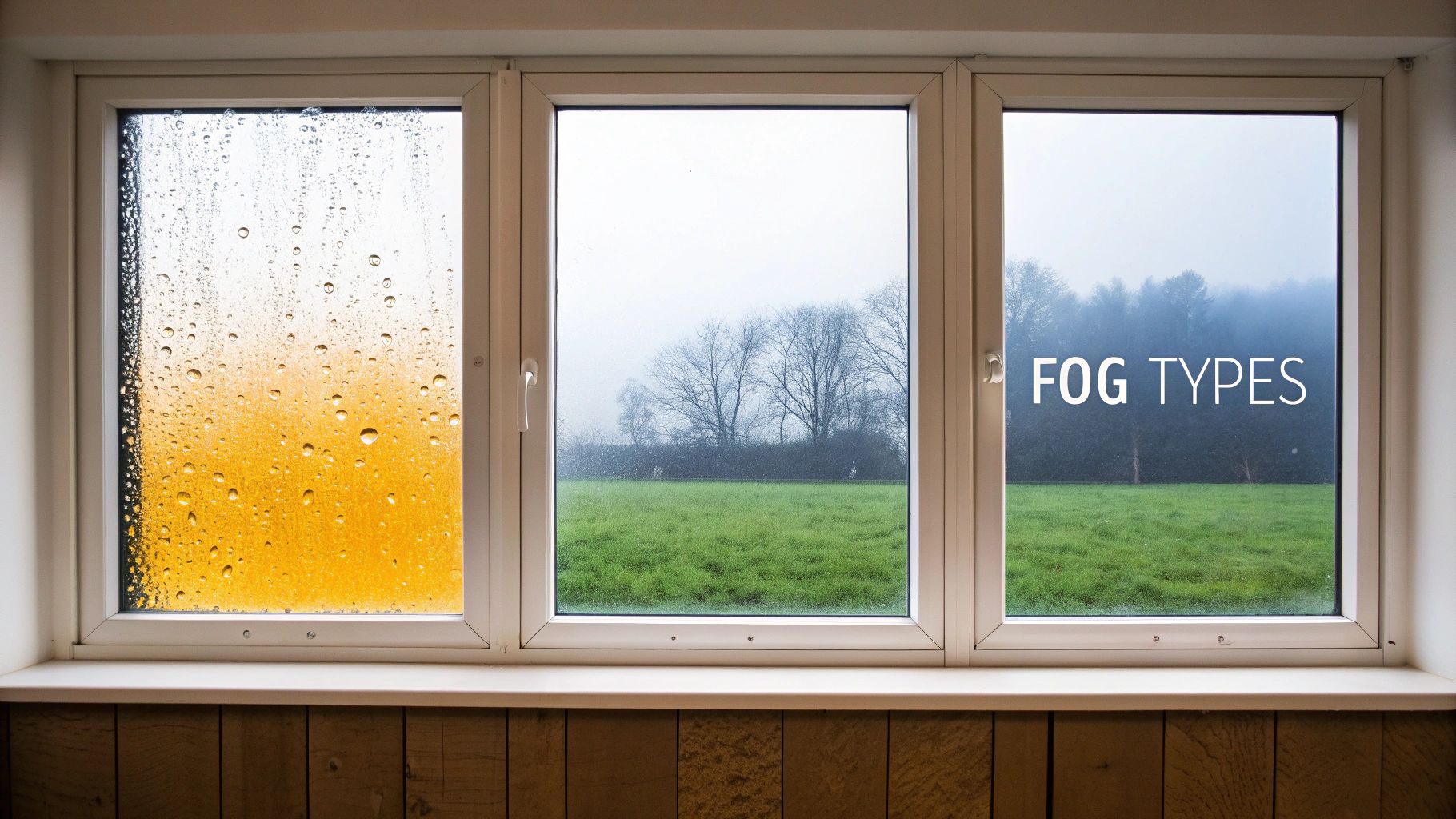
The Three Types of Window Fog
Not all window fog is the same. Whether the moisture is on the inside of your home, on the outside pane, or trapped between the glass tells a completely different story. Each location points to a very specific cause, ranging from a simple humidity issue to a failed window that's secretly draining your bank account.
Fog on the Inside: This is what most people see, especially in the winter. It means the warm, humid air inside your house is hitting the cold surface of your interior window pane. While it might point to high indoor humidity, it’s actually a good sign that your windows have a tight seal and aren't letting in drafts.
Fog on the Outside: If you see this on a warm, humid morning, give your windows a pat on the back. This means they are doing an excellent job insulating your home. The outside glass is staying cooler than the dew point of the humid outdoor air, causing condensation to form there. This type of fog almost always disappears as the sun comes up and warms the glass.
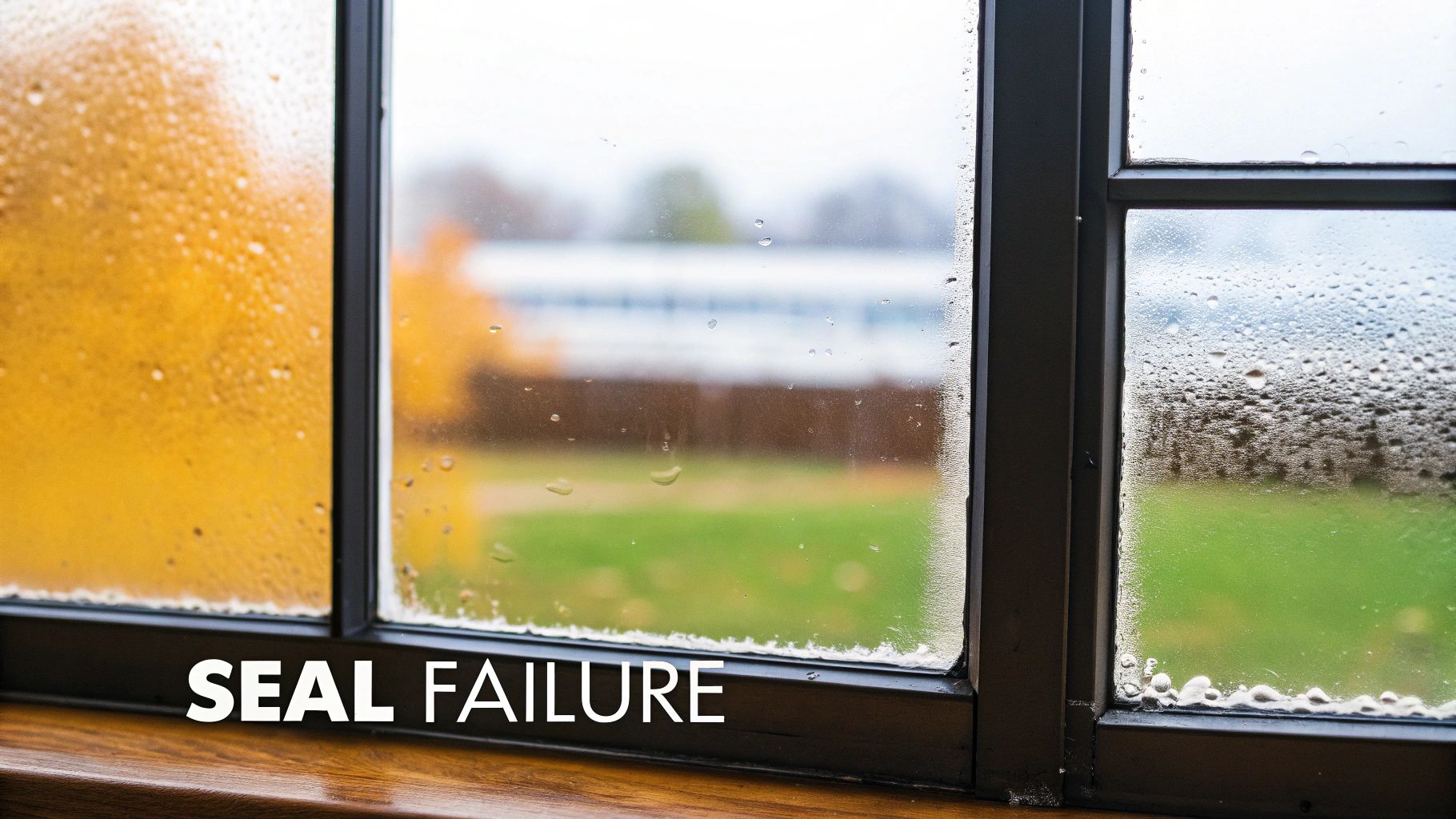
Fog Between the Panes: This is the one you need to worry about. If you see condensation, streaks, or a hazy film trapped between the two layers of your double-pane window, you have a seal failure. The insulating gas that was once trapped between the panes has leaked out, and moist air has crept in. This permanently wrecks your window’s energy efficiency.
This flowchart is a great way to quickly diagnose what's happening with your windows.

As you can see, figuring out where the moisture is immediately tells you whether you're dealing with a simple humidity issue or a more serious window performance problem. Managing the temperature and moisture levels in your home is always the first step, and you can learn more about how to block heat from windows to get a handle on your home's thermal efficiency.
Window Fog Diagnostic Chart
To make it even simpler, here’s a quick chart to help you identify the cause of your window fog at a glance.
| Fog Location | What It Means | Level of Concern |
|---|---|---|
| Inside the House | Your indoor humidity is high, and the air is condensing on the cold window surface. | Low. This is usually a ventilation or humidity issue, not a window problem. |
| Outside the House | Your windows are highly energy-efficient and are keeping the outdoor heat and humidity from getting in. | None. This is a sign your windows are performing exactly as they should. |
| Between the Panes | The window's seal has failed, allowing moisture to get trapped inside the unit. | High. The window has lost its insulating properties and needs to be repaired or replaced. |
Understanding where the fog appears is your most powerful diagnostic tool. It’s the first step toward finding the right solution, whether that’s a simple adjustment to your daily routine or a call to a professional.
Why Your Windows Fog Up on the Inside
Waking up to a chilly Chattanooga morning and seeing a layer of moisture coating the inside of your windows is just a bit of simple science in action. That interior fog isn't necessarily a sign that your windows are broken. In fact, it often means they have a good, tight seal.
It all comes down to temperature and humidity. Everyday activities like cooking dinner, taking a hot shower, or even just breathing release moisture into your home's air, creating a warm, humid environment inside.
When this warm, moist air drifts over and hits the cold surface of your window glass, the air cools down instantly. That sudden temperature drop forces the water vapor to turn back into liquid droplets, creating the fog you see. It’s the exact same idea as the condensation that forms on a cold glass of sweet tea on a hot summer day—just in reverse.
The Science Behind Interior Condensation
Window condensation is a common headache for property owners around here, especially as we head into the winter season. It really picks up during the winter when outside temperatures dip below 40 degrees Fahrenheit. The science is simple: warm air can hold way more moisture than cold air. When your heated indoor air meets a chilled windowpane, the temperature difference squeezes the water vapor right out of the air and onto the glass.
This gets even more obvious during the holidays. You have family over, and all those extra people in your home are adding more moisture to the air just by breathing, making foggy windows almost a guarantee.
While a little fog is perfectly normal, you should pay attention if it's heavy enough to run down the glass. That's a red flag. It means your indoor humidity is too high, which can lead to moisture damage on your window sills and even encourage mold growth.
Checking All Sources of Indoor Humidity
To get a handle on interior condensation, you need to play detective and find every source of moisture in your home. Usually, it's just our daily routines, but sometimes your home's own systems can be part of the problem.
For example, sometimes issues like air conditioner mildew can be a clue that your AC isn't managing moisture correctly, which in turn pumps up the humidity levels inside your home.
Here are a few of the most common culprits that hike up indoor moisture:
- Cooking: Boiling a big pot of pasta or simmering a soup sends a ton of steam into the air.
- Showering: Those wonderful hot showers fill your bathroom and nearby rooms with warm, moist air.
- Humidifiers: They’re great for comfort, but their entire job is to add water vapor to your environment.
- Indoor Plants: Your houseplants release moisture through a process called transpiration.
Ultimately, managing interior fog is a balancing act. You have to control your indoor humidity and improve air circulation to keep that moisture from camping out on your windows and causing bigger problems down the road.
What It Means When Fog Is Trapped Between the Panes
While fog on the inside or outside of your windows is usually a temporary nuisance, seeing moisture trapped between the panes is a whole different ballgame. This is the fog you can’t wipe away, no matter how hard you try. It's an undeniable sign that your window's seal has failed.
Modern double-pane windows, also called insulated glass units (IGUs), are built with a special airtight seal. This seal traps an inert gas like argon between the two panes of glass, which creates an insulating barrier that’s fantastic at slowing down heat transfer. When that seal breaks, the window loses its protective superpower.
The Slow Process of Seal Failure
Think of a window seal like a car tire. A brand-new tire holds air perfectly, but after years of hitting potholes and dealing with temperature swings, it can develop a slow, almost undetectable leak. Your window seals fight a similar battle every single day here in the Chattanooga area.
The daily cycle of a cool morning followed by a hot, sunny afternoon causes the gas and air inside your windows to expand and contract. This constant push-and-pull is known as thermal pumping, and it puts relentless stress on the window's seals. For years, the seal holds strong, but eventually, this pressure creates tiny, microscopic fractures that start to grow.
Once condensation appears between the panes of a double-glazed window, it's a clear signal that the window has failed. At this point, it needs professional attention, which usually means repair or full replacement of the glass unit.
This is because that protective inert gas has finally leaked out, and humid outside air has seeped in to take its place. That trapped moisture is what causes the permanent, hazy fog that ruins your view and points to a major problem. You can find more details about how double-pane windows can fail over time on nachi.org.
More Than Just a Bad View
A failed window seal is much more than a cosmetic issue—it’s an energy efficiency disaster. As soon as the insulating gas is gone, your window loses most of its ability to block heat from passing through. This forces your HVAC system to work overtime just to keep your home comfortable, leading directly to higher energy bills all year long.
During our cold winters, that failed window becomes a major weak spot where heat escapes, making rooms feel drafty and uncomfortable. Understanding that fog between the panes means a failed seal helps property owners in Chattanooga and the surrounding areas recognize when a simple foggy window has become a real problem that's costing them money and comfort. It's the critical difference between a minor issue you can manage yourself and a structural failure that needs a professional solution.
Alright, let's get that foggy window situation cleared up. When you see moisture clouding up your view on a chilly Chattanooga morning, it's easy to get frustrated, but fixing it is usually simpler than you think.
Most of the time, this isn't a major crisis. It's just a matter of making a few small, smart adjustments to your daily habits. Think of it as giving your home a chance to breathe.
The real culprit is almost always excess moisture trapped inside your home. That humidity comes from everyday stuff—showering, cooking, even just breathing. When that damp air hits a cold window pane, boom: condensation. Your goal is simply to give that moisture an easy escape route before it camps out on your glass.
Get Your Air Moving
Stale, stagnant air is a playground for humidity. The single most effective thing you can do to fight window fog is to improve your home's airflow. When air is circulating, it whisks away that moisture before it can settle and condense.
You don't need a fancy system to do this. Flip your ceiling fans to their low, clockwise winter setting. This gently pushes the warmer air that's pooled near your ceiling back down into the room, which helps keep your window surfaces from getting quite so cold.
And don't be afraid to crack a window for just 5-10 minutes a day. Yes, even when it's cold! That quick exchange flushes a ton of humid air out of your house. It’s one of the fastest ways to drop your indoor humidity levels.
Build Some Moisture-Busting Habits
You'd be surprised how much your daily routine contributes to the moisture in your air. A few tiny changes can make a massive difference over time, and they don't cost a thing.
Give these simple habits a try:
- Use Your Fans: That exhaust fan in your bathroom? Run it during your shower and for another 15 minutes after you're done. Same goes for the range hood in the kitchen—anytime you're boiling water or cooking up a storm, flip it on.
- Lid Your Pots: This one's almost too easy. When you're cooking, just put a lid on the pot. It dramatically cuts down on the amount of steam released into your kitchen.
- Check Your Houseplants: We love our green friends, but they release moisture into the air through transpiration. If you have a jungle in one corner, try spreading them out a bit to avoid creating a mini-rainforest in one spot.
By actively managing moisture at its source and keeping air circulating, you're not just clearing up your view. You're also creating a healthier indoor environment and protecting your window frames and sills from potential moisture damage.
These practical steps are your first line of defense against interior condensation. If you're ready to take a bigger step toward creating a more comfortable and efficient home, check out our guide on how to improve home energy efficiency. Taking control of your home’s climate is a powerful way to enhance comfort and reduce energy costs all year long.
How Window Film Improves Window Performance
While managing humidity is a great first step, you can also upgrade your windows to fight fog more effectively. Think of modern residential and commercial window film as a powerful tool that transforms your existing glass into a high-performance barrier, especially during the cold Chattanooga winter.
Picture your window glass as the front line in the battle between your cozy indoor air and the frigid temperatures outside. On its own, the interior surface of the glass gets extremely cold. When your warm, humid indoor air touches this chilled surface, condensation forms instantly—that’s the fog you see.
High-quality window film acts like a thermal shield. It adds a crucial layer of insulation directly to the glass, which helps keep the interior pane’s surface temperature warmer. This simple change reduces the drastic temperature difference between the air and the glass, making it much harder for condensation to form in the first place.
More Than Just a Clear View
This added insulation does a lot more than just keep your windows clear; it directly impacts your home or business’s energy efficiency. During the winter, that same thermal barrier that prevents fog also works to keep your expensive heated air inside where it belongs.
By slowing down heat transfer through the glass, professional window film helps your HVAC system work less to maintain a comfortable temperature. That means lower heating bills and a more consistent, comfortable indoor environment.
A common misconception is that window film can damage double-pane windows. In reality, professionally installed, high-quality film actually reduces the thermal stress that contributes to seal failure over time, making it a smart, protective investment for any property in the Chattanooga area.
An Investment in Window Longevity
The constant expansion and contraction from daily temperature swings puts immense stress on the seals of double-pane windows. This is one of the main reasons seals fail, leading to that permanent, ugly fog trapped between the panes.
Insulating window film helps moderate the temperature of the glass, lessening the severity of these expansion-contraction cycles. This reduces the strain on the seals, which can extend the functional lifespan of your windows. It’s a proactive step that not only improves comfort and efficiency today but also helps protect your windows for tomorrow.
When you're considering the best approach for your property, it's often helpful to weigh all your options, including the differences between solar screens vs window tint. Understanding the unique benefits of each solution can help you make an informed decision for your home or business.
For property owners within our 45-60 mile service radius around Chattanooga, TN, window film is one of the most effective upgrades for enhancing comfort and efficiency year-round. To see a detailed breakdown of the financial benefits, you can learn more about window film energy savings and how it provides a real return on your investment.
Common Questions We Hear About Foggy Windows

As Chattanooga’s go-to window film experts, we get a lot of questions from homeowners and business managers about foggy windows. It can be tough to tell what's a minor annoyance and what's a sign of a real problem. Let's clear the air and give you the straightforward answers you need.
Will Window Film Fix Fog Trapped Between My Panes?
This is probably the most important distinction to make. The short answer is no—neither residential nor commercial window tinting can fix moisture that's already trapped between the panes of a double-pane window.
Once you see that milky haze in the middle, it’s a sure sign the window's airtight seal has failed. At that point, the only real fix is to replace the insulated glass unit (IGU).
However, think of professional window film as a powerful preventative measure for your healthy windows. By adding a layer of insulation, the film helps reduce the wild temperature swings on the glass surface. This dramatically lessens the thermal stress that causes those seals to break down in the first place, helping extend the life of your windows while making them more energy-efficient.
Why Are My Brand-New Windows Fogging Up?
It’s completely understandable to be alarmed if you see condensation on brand-new windows, but it's surprisingly common and usually not a defect. Think about all the materials that go into a new construction home: fresh lumber, concrete, and drywall are all loaded with moisture.
As the new home settles and you fire up the heat for the first time, all that "construction moisture" gets released into the air. This sends your indoor humidity levels through the roof, and the coolest surface for it to condense on is your windows.
The good news is that this issue typically gets much better after the first year as the house fully dries out. The key is to keep air circulating during this period to help speed things along.
Is a Little Winter Condensation Okay?
Seeing a bit of fog or a few water beads along the very bottom of a window on a frigid Chattanooga morning can actually be normal. In many cases, it’s a sign that your home is well-sealed and doing a good job of keeping precious warm air inside.
The time to worry is when the condensation is so heavy that it runs down the glass and starts pooling on your windowsill. That's a huge red flag that your indoor humidity is too high. This constant moisture will wreck wooden window frames and create the perfect breeding ground for mold, so it's a problem you'll want to address.
Can Window Film Damage My Double-Pane Windows?
This is a common myth we are always happy to bust. When installed by certified pros using high-quality products like those from XPEL, modern window films are specifically engineered to be 100% safe for double-pane windows on any home or commercial building.
Nearly every problem we see comes from one of two things: cheap, low-quality DIY films that can't handle thermal expansion, or an installer who doesn't know what they're doing. A professional application is non-negotiable. It’s what guarantees the film performs exactly as it should and protects your window investment for years—a promise we stand by for every client in our 45-60 mile service area around Chattanooga.
Ready to upgrade your home or business with a solution that delivers comfort, energy savings, and protection for your windows? At Solar Sentinel Window Films & Tinting, we offer expert consultations and flawless installations using premium films backed by a lifetime residential warranty. Take control of your indoor climate by visiting us online today